01
Condition the clay base
Before any concrete, we moisture-condition and compact the subgrade over the black clay so the slab sits on something even. Skip that step and shrink-swell soil lifts one part and drops another.
A driveway that stays flat over Austin's moving clay. Sized to the vehicles, reinforced to bridge the soil, and based right so the low bid's thin slab doesn't become your problem.
Tear-out, forms, base, reinforcement, pour, screed, broom, joints, cure. The whole job, in 3D.
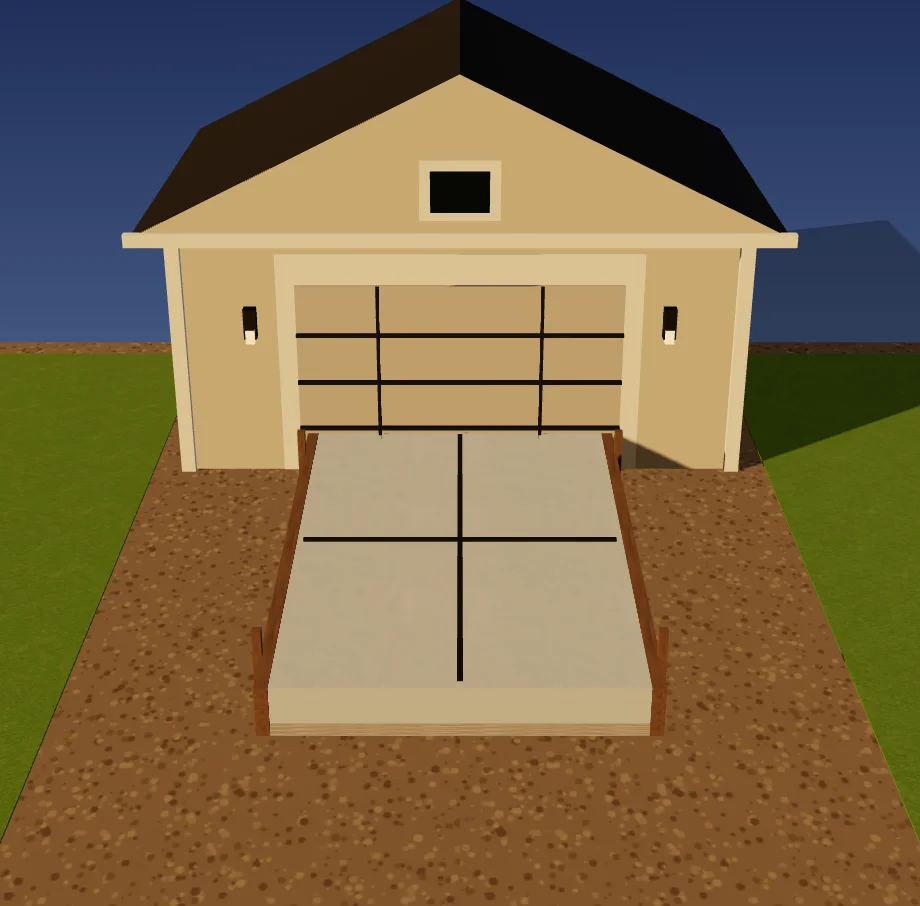
Drag the handle to reveal the finished pour.
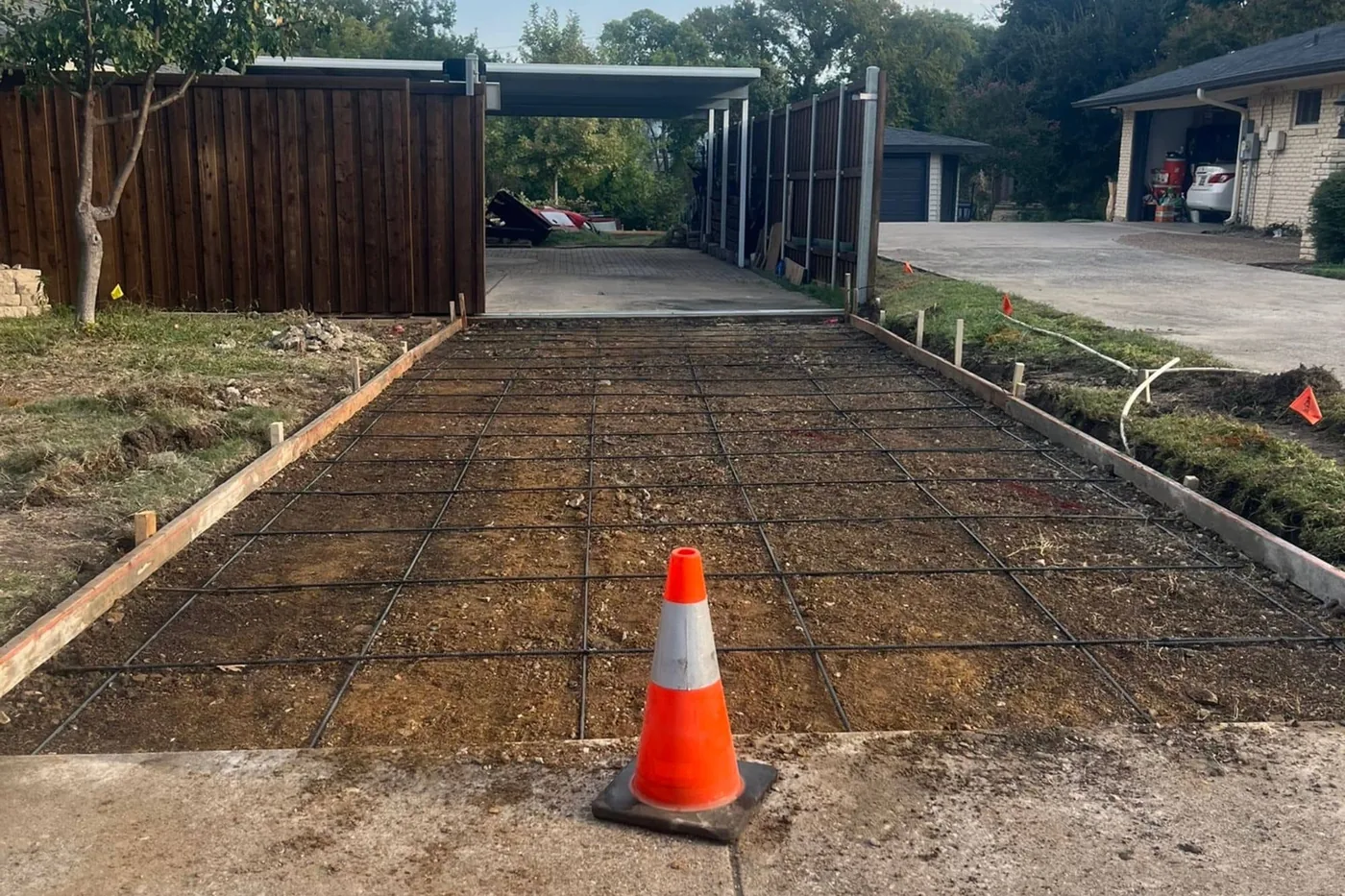
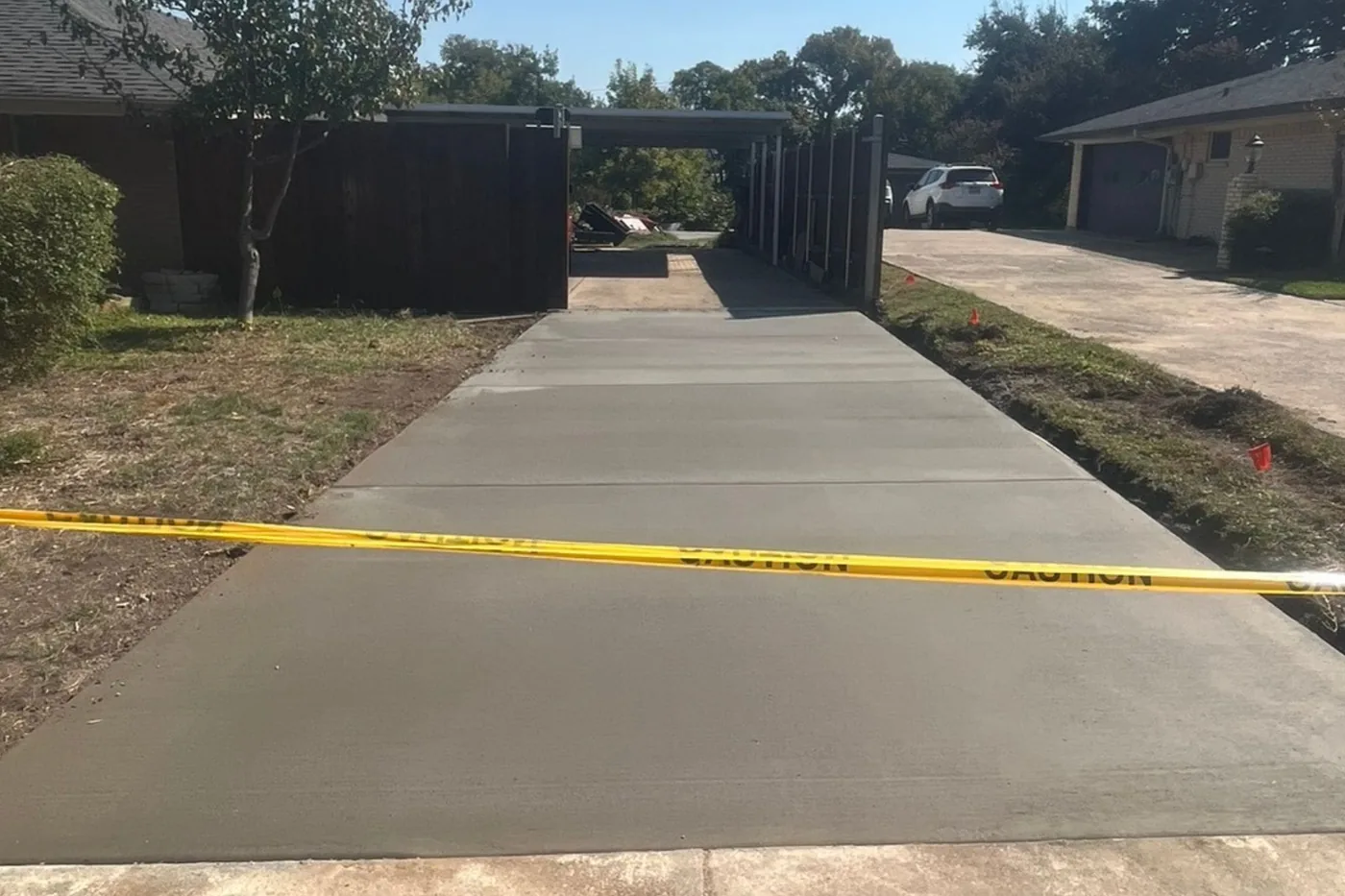
Credibility comes from how it's built, not from promises. Here's the order of operations on every concrete driveways job.
Before any concrete, we moisture-condition and compact the subgrade over the black clay so the slab sits on something even. Skip that step and shrink-swell soil lifts one part and drops another.
We pour driveways in the 4 to 6 inch range, set to the vehicles parked on them and to how much the ground beneath is likely to move.
Steel on a grid lets the slab carry weight and span the small shifts that come with every wet-then-dry cycle this soil runs through.
We match the mix to the load, then place expansion and control joints that absorb movement and meet the apron and street cleanly.
You get a firm date to drive on it. In summer that means curing through the heat so the slab is genuinely strong under the wheels, not just dry to the touch.
Most contractors vanish after the deposit. We pick up the phone, show up when we say, and stand behind the work after the truck leaves. The follow-through is the difference.
A foreman we know runs your job and a vetted crew does the work, managed by Lucky's, one company accountable from the first call to the final walkthrough.
COI and lien waivers on file before we break ground. The documentation that lets commercial clients pay and gives homeowners peace of mind.
Prepped subgrade, reinforced and mixed to spec for the job, and proper curing. We build credibility through the process, not promises. On concrete driveways, that starts with condition the clay base.
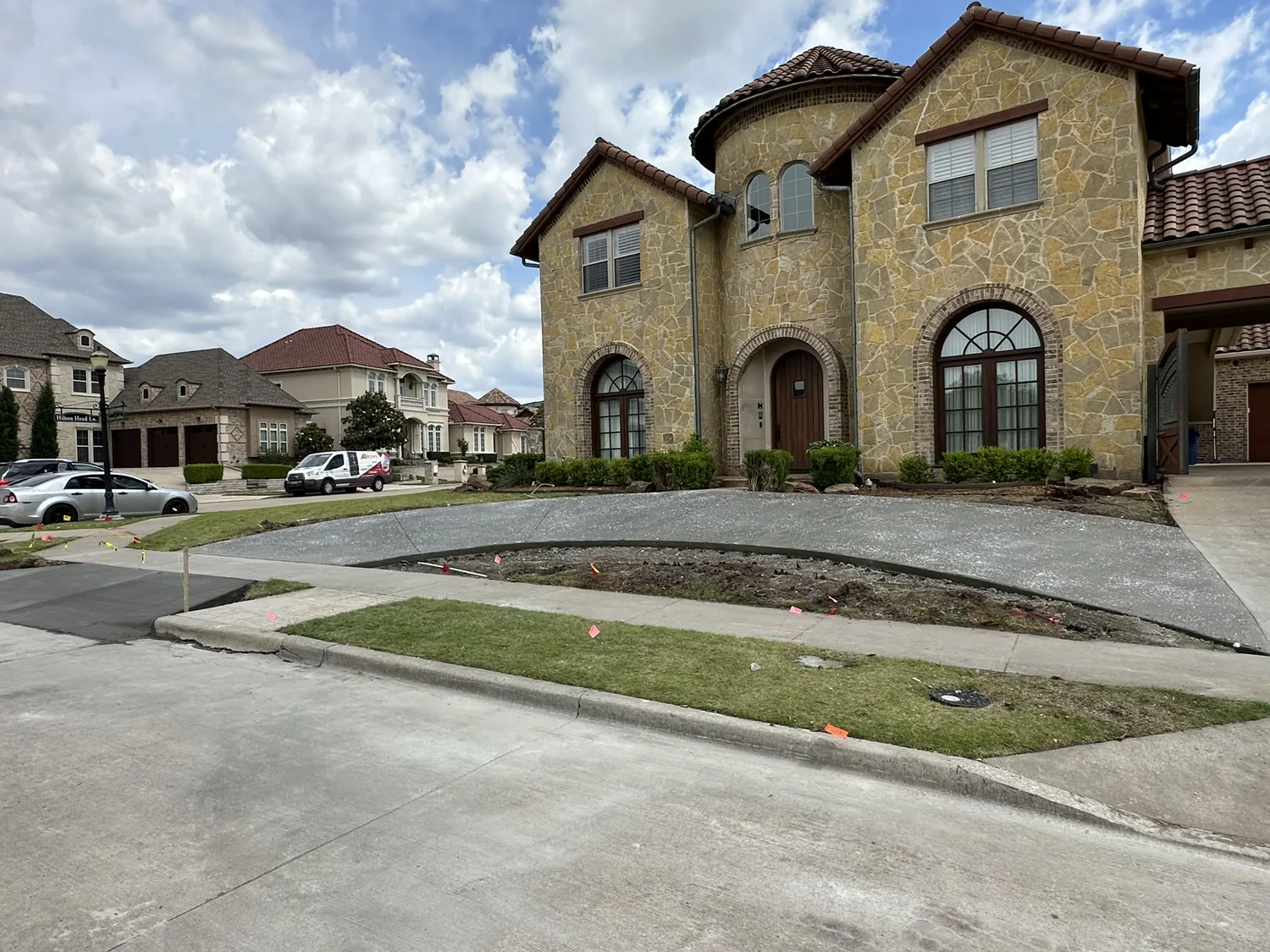
An Austin driveway costs more than a flatwork-only quote because it's engineered for the soil: a moisture-conditioned, compacted base over the black clay, a reinforcement grid, and joints placed on a plan. As a starting range, standard residential driveways run about $8 to $14 per square foot, higher for decorative finishes or a heavy tear-out. From there it tracks square footage, thickness, finish, and demolition. We put a number on it after we have seen the site, not blind over the phone.
Two layers of defense. Below, a conditioned and compacted base so shrink-swell clay can't heave the slab from underneath. Above, a reinforcement grid and joints set on a layout. This soil is going to move; our job is to decide where that shows.
The cause is almost always the ground rather than the concrete. The black clay puffs up after rain and contracts in drought, so a slab dropped on a thin, unprepared base ends up spanning soil that keeps shifting. We fix that at the base, then route the unavoidable movement into the joints.
Typically 4 to 6 inches for everyday passenger vehicles, thicker for RVs or heavy trucks. We size it to what you actually park and to how active the clay underneath is, instead of defaulting to one number.
Foot traffic comes first and vehicles later, since concrete keeps strengthening well after it looks finished, and a summer pour needs to cure rather than bake dry. We hand you the exact dates for your pour up front.
Yes. Demolition, haul-off, and a fresh pour, quoted as one job. An old slab that has heaved or split down the middle usually points to a base failure on clay, which we correct on the rebuild.
You'll hear back from a real person, usually the same day. No call center, no runaround, no chasing us down.
Booking up fast this season. Or call (737) 530-9902